22 Oct 2023
Sofia Kovaleskaya and Alice Munro
12 Oct 2023
"Face" by Alice Munro
THE RIPPLE
in
Face by Alice Munro
Keywords: Birthmark, drama, judgement, relationships, what if… Click here to read the story in “The New Yorker.”
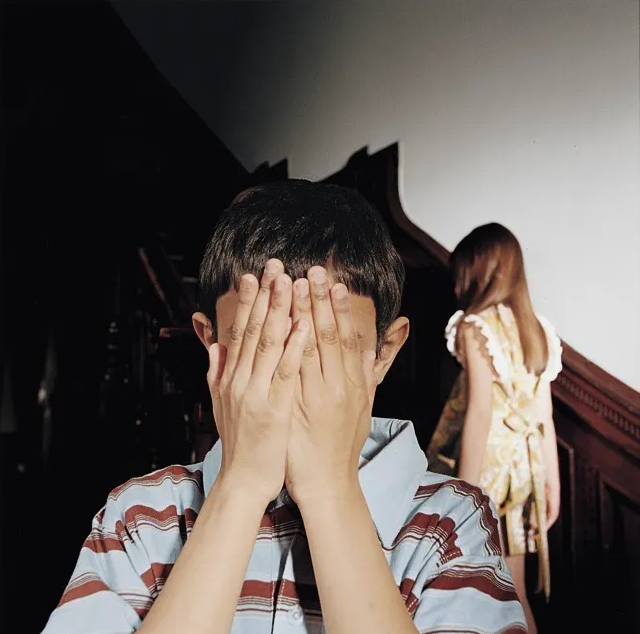
“Face,” the title that the short story honours, is a decoy for a more expansive ripple (other than the visible “face”): selfhood, relationships between children, adults, peers and the muted voice of a vitriolic community .. . The narrator is physically “branded” from birth by a mark on his face. The narrator ushers us into the journey of his selfhood through the overstretched sinews of his family life. His father rejects him from birth as “ a chunk of chopped liver,” his mother protects him by endorsing “his” birthmark as a token that will make the “white of that eye look so lovely and clear “ and which he adds,”was one of the idiotic though pardonable things my mother would say.” Rejected by his father and protected by his mother, the narrator undermines all judgement: “One side of my face was—is- normal. And my entire body was normal from toes to shoulders...My birthmark not red, but purple.” This retrospective narrator stands rationally athwart between his father’s derogatory treatment and his mother’s aegis.
His clinical incisiveness by referring to his physical appearance from a rational point of view, his right away rejection of his father’s conception, his subtle allusion to a voiceless body of an omnipresent community, as in many other Alice Munro’s stories, “a son, which is presumably what all men wanted” wage war about the expansive wave of many of the other connections that will take place in the short story. The rift between his parents is older than him: “In all my years in the town, I encountered no one who was divorced, and so it may be taken for granted that there were other couples living separate lives in one house” (141)
In town, people said “she was beautiful, some people told me” (page 140) and also, they say (he) ”Calls a spade a spade. That was what was said of him” (140). In this place, “hate and despise are customary.”
This is the drama of ordinary lives, children call each other names Grape-Nuts, Stink, His Grace… Pete has been to the war and he is now a gardener with a limp, who is called nazi by Nancy and the protagonist to serve their random fancies. Nancy cruelly paints her face red to imitate the protagonist, who comes to a terrible realization that his birthmark might be that red, but, who does not take it as badly as his mother who goes berserk and vents her wrath through the many tentacles of hidden pain. She snips gladiolos in a frenzy, because she cannot hold Sharon nor Nancy any longer, She cannot longer swallow the infidelity of her husband with Sharon, “Sharon dewy rose” as the hymn at school went. The birthmark expands the ripple through the innards of less visible pain. This is about the great drama of Nancy who looks for connection and cuts her face with a razor to mirror the narrator. They both had feelings, “such deep feelings. Children have,” because they have both listened to “Alice in Wonderland’s stories” and wonder about the potions that might be poisoned and make you smaller so you can fit through the hole. Nancy’s father died of blood poisoning.
This is the “Great Drama,” as he calls it, which is not really a drama, but lives, a life, a job indeed, the narrator’s job as an actor: “my voice stood me in good stead,” he says. Another voice stands him in good stead when stang by a wasp, at hospital, and blindfolded, he listens to familiar narratives he knows, read to him by a mysterious reader. There is only one he is not familiar with and which he finds among weathered pages, and probably "buried in a deep cubbyhole of his mind": Walter de la Mere`s. Walter de la Mere's poem bespeaks of time that does not really heal, and absence.
You may never come across what you have left behind, but what if …. “the answer is of course, and for a while, and never”
5 Oct 2023
Alice Munro' s "Child's Play"
Ring around the Rosie no More:
Alice Munro’s ghastly
Child’s Play
"Ring
around the rosie/
A
pocket full of posies. / Ashes!
Ashes! We all fall down! "
(“Ring around the Rosie," click here to see the origin of this Nursery Rhyme
Keywords mentioned in the workshop as to the analysis of the story: relentless, ruthless, expiatory, manipulative, implacable, difference, special, safety...
“Child’s play” is a ghastly confrontation about the lack of safety in life regarding moral, physical and psychological issues. What drives us apart is the constant swirl of differences which we desperately try to surpass. Marlene and Charlene are brought together through the outside layers of their personnae: they are identified at camp as twin sisters due to the coolie hats, and the fashionable names. Soon, they trade their differences: the freckles and the tan, the averting social status to which they belong, and, later, their paths in life divert through their ideological and family commitments. Marlene is the University woman, resilient to the lack of bonds and ruthlessly determined. Charlene, on the contrary, feels the burden of guilt and needs some soothing placebo in her deathbed that may expiate her from the “trauma” of past.
Verna’s special character does not solely label her, the differance (term deployed by Jackes Derrida, click here to see the implications of the word) that sets her apart from "the ordinary" is extended to the “differance” of the rest of mortals themselves. Their cosy lives are affected by the same lack of communication, the misundertandings and the relentless cruelty that they enact upon each other.
Marlene doubts whether fulfilling or not her friend’s mission in pursuit of peace. Marlene hesitates whether to travel to Guelph or not, whether to go to hospital or not, whether to destroy or keep the letter. She ruthlessly approaches her dying friend in hospital by referring to her as an undiscerning lump. The pomposity of the church / cathedral / undefined / unidentified building/ grand or not grand does not dazzle Marlene as the Valhalla that Charlene dreams of to alleviate her conscience, The place is unattended. Father Hofsreader is on a vacation, and the perfunctory priest does not aid much as a lot of questioning, red tape, and forgetfulness overtake the situation.
Alice Munro departs from the narrow family ambiance, the nook where children are supposed to feel safe and protected. A tiring anticipatory “I suppose” indicates otherwise the tedious cycle of ordinary lives in the face of uneventful matters. The hushing and shushing of the tragedy remains blanketed in the talk that there is afterwards, in the absence of the word “murder” or “drowning.” Again an undercurrent of ambivalence leads the reader to construct the story in their mind, what is there in the letter? Was it an accident? Did Marlene return to Toronto, her present; or did she, on the contrary, remain in Guelph that night, her past?
Charlene’s voice is described as special, Verna is one of the “Specials.” Marlene writes a book “Idols and Idiots” who wins her “a disapproval from colleagues,” and “small flurry of attention in the outside world” (page 210). Marlene is an idol with feet of clay. Charlene vividly gathers the strewn pieces of the narrative that Marlene delivers on Verna, to the point of acknowledging the presence and power the girl distills and impinges on Charlene. Marlene’s tour de force and influence on her friend is so ominous that she seems to have won her as an adept to her cruel cause. Only Charlene needs some attonement and Marlene carries on with some sublimation of the “traumatic” event in her professional pursuits.
What are you thoughts? Please post your comments and insights!
26 Sept 2023
INTRODUCTORY SESSION: READING CLUB 23_24
20 May 2023
MULTIFACETED ALICE MUNRO
"TOO MUCH HAPPINESS"
MULTIFACETED MUNRO
A REVIEW OF YOUR FAVOURITE STORIES
Revisiting Mrs Dalloway: Creative Writing
Rewriting Mrs Dalloway de Ana María Sánchez Mosquera
-
“Duplicity versus duality” in Margaret Atwood's Alias Grace by Begoña Rodríguez Susanna and the Elders by Artemisia Gentileschi “I felt...
-
“ The Bear,” a review by Begoña Rodríguez Varela “ Into the wind” By Marion Rose (Pic chosen by Begoña Rodríguez Varela) . Click here f...
-
“ HAMNET: Transfiguration of Life into Sublime Art” by Begoña Rodríguez Varela “ Hamlet and the spectre” By Eugène Delacroix : click ...