23 Apr 2023

"Hamnet" reviewed by Mila Prol


Brotherly bonds

by Mila Prol
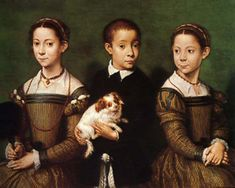
Sofonisba Anguissola - "Three children with dog" (1570)

In this novel, Maggie O'Farrell depicts, masterfully and delicately,true fraternal relationships between siblings that go beyond life. As Agnes and Bartholomeu grow up in a hostile environment, she has the urge to protect him from his stepmother.

“She grows up knowing that she must protect and defend Bartholomew from all of life’s blows, because no one else will.”

Equally, when she falls in love with that “useless and beardless lad,” according to her stepmother, Bartholomew corresponds to her tenderness by being watchful of her future well-being:

“Take good care of her, Latin boy, very good care, and no harm will come to you.”

Correspondingly, he will abandon his farm and family duties to accompany his sister on her trip to London, where uncertainty awaits her.

Similarly, when a young Hamnet is desperately in search of an adult to aid his ill twin sister, Judith, as death looms imminently, he doesn’t doubt to give his life for hers, in an act of true love and sacrifice.

“It will be easy for Death to make a mistake, to take him in her place.”

As a result of this tragedy, the feeling of being incomplete will invade Judith’s life.

“What is the word, Judith asks her mother, for someone who was a twin but is no longer a twin?”

Bartholomew and Hamnet are the omniscient protectors of their sisters, always there, if needed, always in their memory.


15 Apr 2023

"Hamnet" reviewed by Belén Tizón Méndez


AGNES: SWARMING LIFE

by Belén Tizón Méndez 

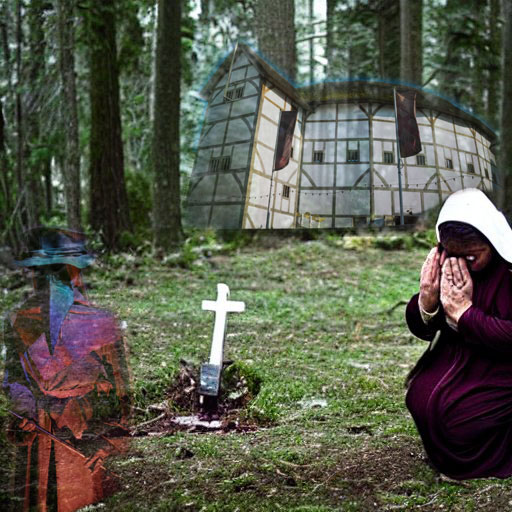
Source: https://leabradovich.com/artworks/new-work

 It was about time to give relevance to those women who back men, always a couple of steps behind but irradiating ideas, love and upholding full-time support in order to inspire their careers, and ultimately their success. This fact seems to be one of the aims in O’Farrell’s novel. The Great Shakespeare, master of Universal literature is intentionally and completely left aside. His real name is not mentioned at all, he is always named for his roles: husband, father, Latin teacher, no trace of his name, but on the contrary, his wife’s, Agnes, is mentioned and highlighted all along the novel; not only her name but also her constant and heroic endeavours.

I wonder if O’Farrell’s purpose is to give back to this masculine character the ostracism women, wives, daughters are or were used to having all along history. The main character of this novel is Agnes. An endless list of epithets could be used to describe her: a superwoman; a loving, caring, tender mum; a pretty woman with a wild allure; nature-lover—precisely, her understanding with animals makes her a misunderstood woman, being harshly criticized by neighbours and even relatives (i.e. her stepmother), and also despised. M. O’Farrell has selected very accurately all the natural symbols (bewitchery, herbs, bees, plants, birds) that surround Agnes, these are key to understand her personality and to let the reader know how she feels.

  • “A woman with a room of her own.” She behaves freely and moved by her intuition, escaping from conventionalism (she gets pregnant before getting married, she does get dressed in a modest or conventional way), she gives evidence of being a brave woman (she gives birth in the middle of the forest, she brings up her kids alone, she confronts her step family)
  • A pleasure-seeker of small things, a woman living life passionately in all senses: family, nature, sex.

  • Resignation is also present in her life, we can feel the traces of resignation when his husband closes up in his room day after day and finally decides to leave to London, in search of a better life but just for him, for the sake of becoming a recognised writer leaving Agnes with the eternal doubt about being cheated by other women.

As an empowered woman, she tries to cope with the most terrible fear in a person’s life, the death of a child and, despite of it and all the misfortunes she had to confront, she always emanates positivism, heading up, as she says:

“Later, and for the rest of her life, she will think that if she had left there and then, if she had gathered her bags, her plants, her honey, and taken the path home, if she had heeded her abrupt, nameless unease, she might have changed what happened next. If she had left her swarming bees to their own devices, their own ends, instead of working to coax them back into their hives, she might have headed off what was coming.”


9 Apr 2023

"Hamnet" reviewed by María Angeles Machado Panete


One Woman, a Million ones

by María Angeles Machado Panete

 Source for illustration click here

In this fictional historical based novel, the author leads us into every hook and nook of a 16th century household. The manicured elaborated atmosphere of that gloomy time draws us into the family daily routine. Enthralled by their ups and downs, suspense makes it difficult to put the book down. Seeping through all the story, a timeless character stands out: Agnes, a woman, a million ones. Early on, she realizes that feeling of not belonging, of being wrong. However, she is determined to live her life to the fullest. She can read minds, change outcomes by using her psychological assets. Her wisdom is valued and required. She can navigate through troubled waters. She controls her world till life strikes her on the face. Suddenly, certainties desert her. She feels helpless, impotent, crumbled and scattered around. Small things can undo her. Nagging doubts keep tormenting her: She should have realized, how could she have been so blind... Time and the apparently harmless questioning of a friend awakens in her the will to find answers and, eventually, come to terms with the reality of human life.

1 Apr 2023

"Hamnet" reviewed by Cándido Pintos Andrés


"UnHamnetness"

by Cándido Pintos Andrés


It is a story of pain, the pain that, more than love, makes us equal, so equal that we can’t distinguish the eternal writer from the errand boy, the cheating husband from the unforgettable bard or the swan of Avon from a glove seller.

It is the story of a woman with special skills, mother of a special twin but, ultimately, a universal mother of a foreseen dead one.

It is the story of a glover afraid of delving into his mind, a glover who needed the skin and for whom the rest was useless

It is the story of a wife’s grief, a dangerous current that might suck them all, plunge them under, drown their voices forever

It is the story of a boy who died, who half died but survived embodied in his twin sister, a boy resurrected on the stage.

And this is the story of a word that exists just, if you want to listen, that exists just for the orphans or the widows but not for the twins that are no longer twins, a word that the greatest English word-maker would say to his weeping daughter: “UnHamnetness”


"Hamnet" reviewed by Begoña Rodríguez Varela


“HAMNET: Transfiguration of Life into Sublime Art”

by Begoña Rodríguez Varela

“Hamlet and the spectre”  By Eugène Delacroix : click here for source

Indeed,to put an end to the unbearable suffering of a Beloved one is an act of sheer love and pure empathy on the part of Hamnet in Maggie O Farrell's novel. It is just swapping places. Amazingly, the eleven-year-old boy becomes a secret hero like the young prince Hamlet in the renowned tragedy written by the Bard.

Initially, Hamnet takes centre stage in the first scene. He appears coming down the stairs in an empty house and wanders through it like a spectre. It is his ghost-like quality that foreshadows his untimely death as "he slips the bounds of the real world and enters another place easily". On one bed lies his ailing sister, with buboes. Feeling powerless and worried, he bursts into tears. Where is mum?

When she arrives and sees her daughter seriously ill, she applies all her knowledge, puts heart and soul into curing her. Unbeknown to Agnes, Hamnet crouches next to his twin sister. The idea that she may die tears him apart. So, one more time, he pulls off their trick and changes places with her. It is his decision. Judith will live, he will die…

His unexpected death causes devastation and each member of the family mourns him differently. Whereas Susanna, his eldest sister avoids suffering, Judith, the other side of him, is racked with pain. Grief-stricken, she finds a three-cornered space, resembling their mothers womb. It is their place. There, she waits for him to come back.

"No, my love, he will never come again,"Agnes replies and her tears start rolling down her cheeks. From them on, she tries to feel the spirit of her son somehow, but her intuition and extrasensorial powers fail her. Her relentless pursuit of Hamnet's ghost only finds parallel to Judith's, who goes out every night surreptitiously looking for him or his changeling. The Bard seems absent, though … Or Not. 

In London, almost four years after Hamnet's death,he is on the point of releasing and performing a tragedy entitled "Hamlet. " While on stage, Agnes is there watching. She is deeply moved when she sees her husband playing the role of a ghost,whereas his son, the young prince Hamlet is alive. He resembles their son, his gait , his voice. Finally, the Bard has swapped places with Hamnet and brought him back to life. This time… Forever.

"Friendship's Gallery" a short story by Virginia Woolf

The Life of Violet by Virginia Woolf (2025) Three Early Stories Edited by Urmila Seshagiri Source: here      A reworked and redrafted versi...