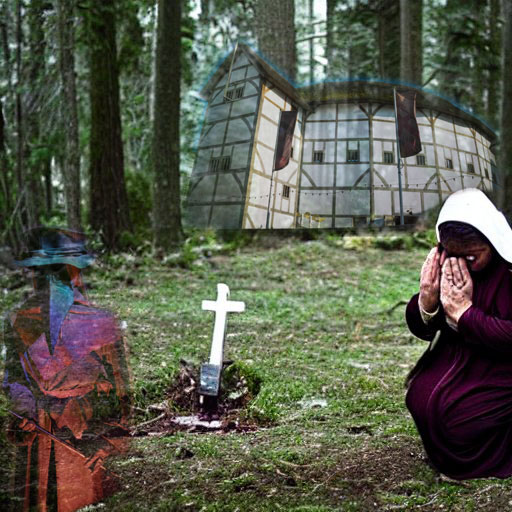
9 Apr 2023

"Hamnet" reviewed by María Angeles Machado Panete


One Woman, a Million ones

by María Angeles Machado Panete

 Source for illustration click here

In this fictional historical based novel, the author leads us into every hook and nook of a 16th century household. The manicured elaborated atmosphere of that gloomy time draws us into the family daily routine. Enthralled by their ups and downs, suspense makes it difficult to put the book down. Seeping through all the story, a timeless character stands out: Agnes, a woman, a million ones. Early on, she realizes that feeling of not belonging, of being wrong. However, she is determined to live her life to the fullest. She can read minds, change outcomes by using her psychological assets. Her wisdom is valued and required. She can navigate through troubled waters. She controls her world till life strikes her on the face. Suddenly, certainties desert her. She feels helpless, impotent, crumbled and scattered around. Small things can undo her. Nagging doubts keep tormenting her: She should have realized, how could she have been so blind... Time and the apparently harmless questioning of a friend awakens in her the will to find answers and, eventually, come to terms with the reality of human life.

1 Apr 2023

"Hamnet" reviewed by Cándido Pintos Andrés


"UnHamnetness"

by Cándido Pintos Andrés


It is a story of pain, the pain that, more than love, makes us equal, so equal that we can’t distinguish the eternal writer from the errand boy, the cheating husband from the unforgettable bard or the swan of Avon from a glove seller.

It is the story of a woman with special skills, mother of a special twin but, ultimately, a universal mother of a foreseen dead one.

It is the story of a glover afraid of delving into his mind, a glover who needed the skin and for whom the rest was useless

It is the story of a wife’s grief, a dangerous current that might suck them all, plunge them under, drown their voices forever

It is the story of a boy who died, who half died but survived embodied in his twin sister, a boy resurrected on the stage.

And this is the story of a word that exists just, if you want to listen, that exists just for the orphans or the widows but not for the twins that are no longer twins, a word that the greatest English word-maker would say to his weeping daughter: “UnHamnetness”


"Hamnet" reviewed by Begoña Rodríguez Varela


HAMNET: Transfiguration of Life into Sublime Art”

by Begoña Rodríguez Varela

Hamlet and the spectre”  By Eugène Delacroix : click here for source

Indeed,to put an end to the unbearable suffering of a Beloved one is an act of sheer love and pure empathy on the part of Hamnet in Maggie O Farrell's novel. It is just swapping places. Amazingly, the eleven-year-old boy becomes a secret hero like the young prince Hamlet in the renowned tragedy written by the Bard.

Initially, Hamnet takes centre stage in the first scene. He appears coming down the stairs in an empty house and wanders through it like a spectre. It is his ghost-like quality that foreshadows his untimely death as "he slips the bounds of the real world and enters another place easily". On one bed lies his ailing sister, with buboes. Feeling powerless and worried, he bursts into tears. Where is mum?

When she arrives and sees her daughter seriously ill, she applies all her knowledge, puts heart and soul into curing her. Unbeknown to Agnes, Hamnet crouches next to his twin sister. The idea that she may die tears him apart. So, one more time, he pulls off their trick and changes places with her. It is his decision. Judith will live, he will die…

His unexpected death causes devastation and each member of the family mourns him differently. Whereas Susanna, his eldest sister avoids suffering, Judith, the other side of him, is racked with pain. Grief-stricken, she finds a three-cornered space, resembling their mothers womb. It is their place. There, she waits for him to come back.

"No, my love, he will never come again,"Agnes replies and her tears start rolling down her cheeks. From them on, she tries to feel the spirit of her son somehow, but her intuition and extrasensorial powers fail her. Her relentless pursuit of Hamnet's ghost only finds parallel to Judith's, who goes out every night surreptitiously looking for him or his changeling. The Bard seems absent, though … Or Not. 

In London, almost four years after Hamnet's death,he is on the point of releasing and performing a tragedy entitled "Hamlet. " While on stage, Agnes is there watching. She is deeply moved when she sees her husband playing the role of a ghost,whereas his son, the young prince Hamlet is alive. He resembles their son, his gait , his voice. Finally, the Bard has swapped places with Hamnet and brought him back to life. This time… Forever.

26 Mar 2023

Introducing “Hamnet” (2020) a novel by Maggie O’Farrell


ABSENCE / PRESENCE

AND THE MAKING OF “HAMNET”


The novel opens up with a dirge, Ophelia’s mourning words to the loss of a loved one.

He is dead and gone, lady,
He is dead and gone,
At his head a green-grass tuft;
At his heels a stone.
Hamlet Act IV, scene 5
By using Ophelia’s voice, Maggie O’Farrell introduces us into the novel through a woman's voice as well as the theme of absence. Counteracting historical absence through fictional presence will be the forceful centripetal vortex of the novel. This is a narrative of an extremely sensorial and pictorial quality which transports us, undoubtedly, to a careful portrait of countrylife in Elizabethan times and reclaims the lost voices of literary and historical chronicles.
Absence and presence will indeed be the axes around which the novel revolves: the blatantly articulated absence of the bard, and the necessity to claim the presence of the forgotten “Hamnet,” Shakespeare’s son. The novel opens up in an empty house, and a frantic desperate search on behalf of Hamnet to find his mother so she can aid ailing Judith, Hamnet’s twin sister. The narrative voice claims Hamnet’s position center stage. We will use the podcast below as a point of departure to understand the brewing process of the novel in which Maggie herself explains how the novel attends to both, thorough research of country life in Elizabethan times as well as her enthralling creativity.

In this podcast (click here to access podcast or see at the end of the entry), Maggie O’Farrell explains how “struck she was about how insignificant, Hamnet appeared to be to scholars.” Shakespeare used his son’s name for a play, a ghost, a hero,” and he would have suppposedly listened to the name, “Hamnet” /”Hamlet” (both the same in Elizabethan times), a myriad times. She also adduces that “Hamnet has been ... downplayed by history. He has been consigned to the margins, to the literary footnote, to the bottom of the page,” and (she wanted to ) “put him center stage, give him a presence, a voice and say this child was important, he was grieved, and without him we wouldn’t have had Hamlet.

The novel depicts “ a multi-generational living” with careful brushstrokes that attend to the minutiae of detail in creating the setting. Maggie comments that there are hardly any documents that may inform about the life of children and women of the Shakespeare’s household. Skin-deep into this world, Maggie says that she learned how to cook Tudor bread herself, learnt falconry, planted a garden of medicinal plants, went into Stratford asking hundreds of questions to everyone and went into archeological digs. These and other details about her making of the novel you can learn about in this podcast.

Where lack of documentation ensued, Maggie comments that characterization was fuelled by her imaginative powers and her knowledge of Shakespeare and his plays from early stages of her life. We had the feeling that the tutor’s perception of Agnes, for example, in her jerkin and unidentified gender could be part of that historical background in which female roles were played by men in Shakespeare’s times. John, Hamnet’s grandfather is depicted as an aggressive man, and of this, she has no documented knowledge, she argues. Contrariwise, there are documented sources about John’s background: he was an alderman, a glove-maker who ran into debt and moved onto wool-business. Let us think of the novel as yarns of wool, bales of wool that are used to knit and entangle the nets on which characters will be inexorably trapped into unchangeable destiny. Agnes thinks:

Later, and for the rest of her life, she will think that if she had left there
and then, if she had gathered her bags, her plants, her honey, and taken the
path home, if she had heeded her abrupt, nameless unease, she might have
changed what happened next.

 Wrapping fabric will trigger tragedy...


More entries on the analysis of this enthralling and captivating work to come by members of our reading club . Do not miss them. Different perspectives, moments and themes of the novel will be analysed.


19 Mar 2023

"Evil Robot Monkey" by Mary Robinette Kowal


The Hellish Limbo 

"Evil Robot Monkey" (2008)

Samson and Delilah by Caravaggio (source for painting)

 “He just wanted to make pottery”//  He held the world in his hands” // living..." in a hellish limbo” // “...too smart to be with other chimps, but too much of an animal to be with humans.” (Evil Robot Monkey by Mary Robinette Kowal)

The creative process

The swishing of a spinner on the act of creation “oozes” calm and quietness. Sly slids his hands over the clay to turn raw matter into an artifact of his creative mind. The malleable nature of clay as a metaphor that catalyzes Sly’s anger into therapeutic performance and a challenging act of artistic creativity can be traced back to Genesis. Marcial precisely brought forward this idea of clay as the matter out of which God shaped human beings. Let us think of Pygmalion’s myth or Mary Shelley’s Frankenstein. The search for being perpetuated through one’s progeny and the power of creating life through liveless matter lie at the core of this constant pursuit of humankind to look for posterity. Art is undoubtedly a way of perpetuating oneself. Sly’s concentration on shaping the clay is not only a way to channel his emotions but it is also presented as a defiant act of empowerment that frames him as a life bestowing creature in a story in which borderlines between animals and humans are blurry.

Surveillance and Commodification

A bang on his pen, a thunk of his own metal robotic head agaisnt the window… abruptly mean the ceasing of his activity, a caesura in the creative process. This moment of indulgence, of artistic creation is institutionally interrupted by a group of children and a teacher who bother him through their clatter and disrespectful attitudes, acting animal-like: “one of them swung his arms aping Sly.”Sly’s act of creation turns into organic ordure as he angrily thrusts his feces against the window pane. This incenses the teacher’s embarrassment and self-awareness...against whom? Sly’s aggressive display? Or the children’s mischief? Or her own embarrassment?

The title of the short story lacks an article: “Evil Robot Monkey,” which is evocative of children’s chatter, or robotic-like language. Furthermore, the title appears in the short story when Vern, Sly’s handler, reports back on how the teacher felt as if Sly needed some rebuking for misbehaviour:

The teacher was upset about the “evil robot monkey”” (the title appears in between inverted comas embedded in the narrative as words reported by the teacher)

What does it mean to be human? who is more human, who is animalized? Who is robotic? Who is subjected to being programmed, or to act accordingly? The children ape, the teacher (Delilah) feels embarrassed when norms are not fulfilled on either side of the animal-human divide, and Vern is referred to as “having manners” with Sly:

You should have told them that I was not an animal”

Mary Robinette’s story certainly questions the hazy borderlines between animals, humans and robots. Sly lives in a hellish limbo.

Delilah, Sly's antagonist in the story, threatens to take the clay spinner away from Sly and thinks that he should be disciplined.  Her name might have not been randomly chosen.  Delilah and Samson’s story (click here for background information) deals with strengths and weaknesses, as well as power.  Biblical Delilah "beguiled" Samson to know the secret of  his strength and power so she could deprive him of it (his hair).  Delilah, in Robinette's story,  weakens Sly by depriving him of his clay, and, therein, of the power to channel his creativity and anger. However, Sly still manages to scoop up some of the clay leftovers: “Sly sat down at his wheel and began to turn again,” the world is back in his hands, as a “deus ex machina.” The vase on the wheel is described as “its walls held the shape of the world within them”.

What are the secret strengths that lie at the core of the animal, human and robotic? Where do weaknesses lurk?


Revisiting Mrs Dalloway: Creative Writing

  Rewriting Mrs Dalloway de Ana María Sánchez Mosquera