14 Feb 2024

"A poet in Mars: The Martian Chronicles by Ray Bradbury"


 A book Review by Cándido Pintos Andrés

"A poet in Mars: The Martian Chronicles by Ray Bradbury"


Photo by Cándido Pintos

Rather than just an author of Science Fiction, Ray Bradbury is a writer in capital letters. In The Martian Chronicles, Bradbury shows us a collection of short stories of deep reflections on humanity and society, with the disguise of the colonization of Mars, when he is really talking about destruction and decay. Along the book, and apparently through the different expeditions to Mars, the author addresses the problem of racism, religion, the expansion of capitalism, the machine-age utopia, the future of technology, loneliness and solitude.  In fact Mars, as the multiple rockets of the story, is just a means and the book could be entitled The American Chronicles with just a few changes and new descriptions

But he is also a visionary, and his stories are a showcase for both future technology (“Mr K himself in his room, reading from a metal book with raised hieroglyphs over which he brushed his hand, as one might play a harp. And from the book, as his fingers stroked, a voice sang, a soft ancient voice, which told tales ..”) and the threats posed by this technology against its creators (“The house was an altar with ten thousand attendants, big, small, servicing, attending, in choirs. But the gods had gone away, and the ritual of the religion continued senselessly, uselessly”) 

Ray Bradbury writes with evocative language and masters creating emotional atmospheres with a prose touched by poetry. If not among the best, one of the most influential writers of his generation, inside and even outside the literary world, despite the fact that “We earth men have a talent for ruining big, beautiful things.”


Cándido Pintos Andrés

9 Feb 2024

Of Mistresses, Coyness and Metaphysics

 John Donne’s “To his Mistress Going To Bed” (1669)

and

Andrew Marvell’s “To his Coy Mistress” (1681)


Source for photo here

This post will aim at providing a comparative insight into John Donne’s poem “To his Mistress Going to Bed” (1669) and Andrew Marvell’s “To his Coy Mistress” (1681), both considered Metaphysical poets. Both poems are addressed to “their mistresses” rather than their “ladies,” or “wives.” The word “mistress” had different connotations at the time:

‘Mistress’ in the 16th, 17th and 18th centuries normally designated a woman of higher social standing without any marital connotation, whether married or unmarried. It could also be applied to women of dubious sexual reputation. (Paraphrased from: History Extra and Mistresses and marriage: or, a short history of the Mrs )

Both mistresses constitute the target of their lover’s amorous requests so they can win their favours regardless of whether married or not, whether they are of high-standing or dubious sexual reputation. They are both the objects, the commodities, the target of the poetic voice verbal pyrotechnic. In Donne’s, the poetic voice exhorts his mistress to go to bed with him, and in Marvell’s, the poetic voice beckons his mistress to seize the day and yield to his requests because they have not “the world nor the time.” Marvell’s poem elaborates on the trope of “memento mori,” the urgency to seize the moment, given the transience of human nature.

In Donne’s poem, the convincing arguments and elegiac tone ( wooing his mistress favours) lay grounds for his verbal witticisms.  He juxtaposes warfare imagery (foe, labour, breastplate) with Petrarchan deconstructed idealization: “heaven’s zone glistering but a far fairer world encompassing,” “the happy busk” he envies and that reveals “such beauteous state.”  The erotic blends with the religious,  as seen in the "hallowed temple" or "Mahomet's paradise."  His mistress is envisioned as a new found land, his America. The commodification is rounded as she becomes a territory to be explored, a land to be conquered. After making his case, and on apparently false pretense of equity, the poetic voice instances his mistress to: “show Thyself; cast all, yea, this white linen hence, Here is no penance, much less innocence” and “To teach thee, I am naked first.” 

In Marvell’s poem, the word “coy” indicates that perhaps no strenuous convincing argumentation will be needed. “Coyness” makes allusion to false pretense of shyness. The poetic voice makes a case about time and the transience of life, “memento mori,” and therein, the need to make most of her youth, “thy skin like morning dew” and cast away her “long-preserved virginity.” 

“Had we but the world and enough time ….But ,,,,” they don’t and “while the youthful hue //Sits on thy skin like morning dew” (while she is still young) “Let us roll all our strength and all / Our sweetness up into one ball..”

As in Donne’s poem, we can also find references to far away lands: the Indian Ganges, empires, gems, and precious stones, a nod to colonialism once more, a larger setting that taps into conquering and possessing.  Religious imagery is present here as well as it can be seen in references to the flood, and the conversion of Jews.  As a counterpart to these promises of love,  there is in “To his Coy Mistress,” the urgency and the overshadowing presence of death as suggested in the “marble vault,” and the putrefaction of the “body”: “the worms shall try.” “They cannot make their sun / Stand still, yet we will make him run” ( a possible reference to “Phaeton and the Sun Chariot”, both an image of death and youth).  Eros kai thanatos is a common literary motif: love and death go hand in hand. 

Whether a more satiric approach in the case of Marvell’s “To his Coy Mistress,” or a more sillogystic analysis of emotions in Donne’s “To his Mistress Going to Bed,” both poems share the brazen irony, and the juxtaposition of impossible elements through metaphors and similes as well as the analytical approach of the spiritual or less tangible that define Metaphysical poetry.


27 Jan 2024

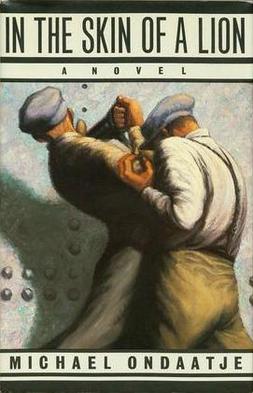
"In the Skin of a Lion" (Michael Ondaatje)

 Caravaggio: more than a character in “In the Skin of a Lion" (1987)

by Michael Ondaatje

A Review by Begoña Rodríguez Varela


In the Skin of a Lion - Wikipedia

 In Michael Ondaatje´s “ In the Skin of a Lion”, indeed, the independent likable character, painted in blue so he can camouflage in the dark and become a burglar, introduces himself as “ Caravaggio- the painter.”. The brilliant Baroque artist imbued his fabulous paintings with great theatrical drama and emotion thanks to his use of extreme contrast of darkness and light, his Chiaroscuro. However in this novel” the dark” reveals itself as a symbol of concealment, of secrecy, whereas the few sources of light, cattails, lanterns or candles, are symbols of life, of dynamism. Only at the end, the light floods in and everything comes alive.


Also, both authors, Caravaggio and  Ondaatje share the idea that, to give a real picture of religious / historic events, those unhistorical forgotten people should undoubtedly  be given their right place.  All of them are also God´s people. Marginal and central figures together. Nice tableau.


Thereby the novel is made up of the intertwined, interconnected stories of a few of the members of those communities of migrants who participated in the construction of Canada: the waterworks, the tunnels , the bridge. It was the Commissioner Harris who had envisioned it. It was them who made his dream come true.  No record was kept of those thousands  who lost their lives then, though. Blankness.


Among those workers is Patrick Lewis, the protagonist, always in the shadows, alone, self-sufficient. He works as dynamiter of jam logs in the harsh countryside of Eastern Ontario and, then, as a searcher in Toronto, where he meets Caravaggio, the thief, for the first time. Afterwards, while in prison, Patrick  would save his life. His first step towards authentic human connection. Friendship.


Later on, both solitaries, who fight against the privileged class violently, devise a plan together to blow up the waterworks. Now Caravaggio is the helping hand and Patrick, the one who swims in troubled waters.


However, after his encounter with Harris, the sunlight fully illuminates the scene. It is then that Patrick understands that no legitimate cause justifies violence, not even the death of just one human being, the Commissioner. Patrick finds his true identity ….at last.


Eventually , in broad light he starts  a journey with Hanna, his late partner´s daughter to Marmora, where his first lover awaits him. But that will be the beginning of another story, different from Caravaggio´s, his friend, who disappeared in darkness.


                          By    @caravaggio72


Mr Reginald Peacock's Day by Katherine Mansfield (2)

  THE IMPORTANCE OF BEING CALLED MR REGINALD PEACOCK by Belén Tizón Source for photo here Katherine Mansfield does not select her main chara...