Désirée’s Baby by Kate Chopin (1892) de Ana María Sánchez Mosquera
29 Jan 2024

27 Jan 2024
"In the Skin of a Lion" (Michael Ondaatje)
Caravaggio: more than a character in “In the Skin of a Lion" (1987)
by Michael Ondaatje
A Review by Begoña Rodríguez Varela
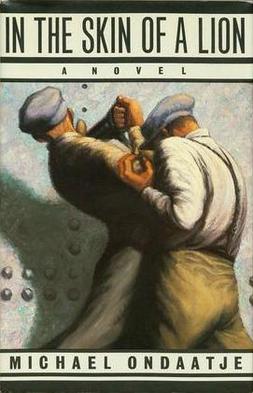
In Michael Ondaatje´s “ In the Skin of a Lion”, indeed, the independent likable character, painted in blue so he can camouflage in the dark and become a burglar, introduces himself as “ Caravaggio- the painter.”. The brilliant Baroque artist imbued his fabulous paintings with great theatrical drama and emotion thanks to his use of extreme contrast of darkness and light, his Chiaroscuro. However in this novel” the dark” reveals itself as a symbol of concealment, of secrecy, whereas the few sources of light, cattails, lanterns or candles, are symbols of life, of dynamism. Only at the end, the light floods in and everything comes alive.
Also, both authors, Caravaggio and Ondaatje share the idea that, to give a real picture of religious / historic events, those unhistorical forgotten people should undoubtedly be given their right place. All of them are also God´s people. Marginal and central figures together. Nice tableau.
Thereby the novel is made up of the intertwined, interconnected stories of a few of the members of those communities of migrants who participated in the construction of Canada: the waterworks, the tunnels , the bridge. It was the Commissioner Harris who had envisioned it. It was them who made his dream come true. No record was kept of those thousands who lost their lives then, though. Blankness.
Among those workers is Patrick Lewis, the protagonist, always in the shadows, alone, self-sufficient. He works as dynamiter of jam logs in the harsh countryside of Eastern Ontario and, then, as a searcher in Toronto, where he meets Caravaggio, the thief, for the first time. Afterwards, while in prison, Patrick would save his life. His first step towards authentic human connection. Friendship.
Later on, both solitaries, who fight against the privileged class violently, devise a plan together to blow up the waterworks. Now Caravaggio is the helping hand and Patrick, the one who swims in troubled waters.
However, after his encounter with Harris, the sunlight fully illuminates the scene. It is then that Patrick understands that no legitimate cause justifies violence, not even the death of just one human being, the Commissioner. Patrick finds his true identity ….at last.
Eventually , in broad light he starts a journey with Hanna, his late partner´s daughter to Marmora, where his first lover awaits him. But that will be the beginning of another story, different from Caravaggio´s, his friend, who disappeared in darkness.
By @caravaggio72
21 Jan 2024
"My Oedipus Complex" by Frank O’Connor (1963) and “Araby” by James Joyce (1914)
Fantasies at War

My Oedipus Complex by Frank O’Connor (1963) set in the close of World War I and Joyce’s Araby (Dubliners, 1914) set in Dublin in times of cultural and religious colonization of Ireland by Great Britain (Pedram Manieem, Shahriyar Mansouri) revolve around stories retrospectively rendered from the perspective of childhood. Lines can be drawn between both stories as to how the narrators´ perception of the world is presented with irony and an underlayer of political, social and economic circumstances.
Larry’s father comes and goes, unnoticed, like Santa Claus in his uniform, disguised in this fantasy, Larry copes with his father’s “mysterious entries and exists.” The war, “ he says, “is the most peaceful period of his life.” The absent father, noticeable for his “amiable inattention,” returns home in the aftermath of the war and ”usurps” his place in the fondness and attachment he feels towards his mother. He must keep quiet, not disturb his father. He is ostracized from the thalamus. It is the first time he hears those “ominous words,” “talking to Daddy.” God is to be blamed for listening to his prayers. Economic hardships wax the tension in the family: no more money at the post office and a bedridden unemployed dad that suffers from shell shock (post traumatic syndrome suffered by many soldiers affer the first war) coalesce to pinpoint the paralysis of the times. An epiphanic moment occurs when the new baby arrives and Larry and his father meet in their own displacement from the mother’s contesting attention.
In James Joyce’s Araby, the protagonist lives under the aegis of his uncle and aunt in an equally oppressive atmosphere as the opening of the short story illustrates, blindness and imprisonment being metaphors for it:
"North Richmond Street, being blind, was a quiet street except at the hour when the Christian Brothers' School set the boys free."
"On Saturday morning I reminded my uncle that I wished to go to the bazaar in the evening. He was fussing at the hallstand, looking for the hat-brush." (“Araby”)
See the political implications of this quote in this other passage from “A Portrait of the Artist as a Young Man” by James Joyce: Dante [his grandaunt] had two brushes in her press. The brush with the maroon velvet back was for Michael Davitt and the brush with the green velvet back was for Parnell." (A Portrait of the Artist as a Young Man)
"I'm afraid you may put off your bazaar for this night of Our Lord."
The narrator’s fantasy of “Araby,” as an exotic escape from this darkness is already frustrated: politics, religion and oppressiveness will impede the fulfilment of his desires. He is doomed from start: his uncle is late for him to go to the bazaar, religion acts as a constraining force, and his pride will stop him from sparing his money out. The house where they live, he says, belongs to a priest. This priest refers to another short story “The Sisters” (Dubliners), connected with the sin of simony ( trafficking with religious objects).
The narrator’s first infatuation with Mangan’s sister will forcefully drive him to the bazaar, “Araby,” on an errand to buy her some token. Both Araby and his first love are wrapped in a foggy halo of fantasy:
I looked over at the dark house where she lived. I may have stood there for an hour, seeing nothing but the brown-clad figure cast by my imagination, touched discreetly by the lamplight at the curved neck, at the hand upon the railings and at the border below the dress.
When he arrives, the bazaar is closed. he listens to two men speaking in a foreign accent, “English,” and full of pride, he recoils from the prospect of buy anything.
I lingered before her stall, though I knew my stay was useless, to make my interest in her wares seem the more real. Then I turned away slowly and walked down the middle of the bazaar. I allowed the two pennies to fall against the sixpence in my pocket. I heard a voice call from one end of the gallery that the light was out. The upper part of the hall was now completely dark.Gazing up into the darkness I saw myself as a creature driven and derided by vanity; and my eyes burned with anguish and anger.
Irony, humour, innocence and growing pride understate and conversely highlight the frustrated fantasies that both narrators undergo in their harsh encounter with the social and political turmoil of the times.
13 Jan 2024
"C.S. Lewis versus Paul Auster"
A Review
by Cándido Pintos Andrés

Sometimes a book calls you up at the right moment. More than twenty years ago the film “Shadowlands” was recommended to me by a friend, after a long talk about God and grief. My love for Debra Winger did the rest; that is how I found C.S. Lewis and “ A Grief Observed.”
The nights of this grey and rainy autumn were a fabulous opportunity for pulling out of the drawer many films and songs almost forgotten: “Smoke” was the chosen one.
“Smoke” is an independent film from 1995 directed by Wayne Wang and based on a story written by the American author Paul Auster, whose short story “Auggie Wren's Christmas Story” plays an essential role in one of the best and most highly known scenes.
So, with the fresh reading of “A Grief Observed” and Paul Auster unconsciously in my mind, another greyish evening led me to a bookshop and, once among the shelves, my eyes focused instinctively on the last book by Paul Auster: “Baumgartner.” And I bought it
In “Baumgartner,” Paul Auster offers a tender reflection of loss, memory, and grief in such a way that I could not help but think that Paul had been in our reading workshop last week and had rewritten, with other words, many of the paragraphs of C.S. Lewis’s book.
“Did you ever know, dear, how much you took away with you when you left? You have stripped me even of my past, even of the things we never shared. I was wrong to say the stump was recovering from the pain of the amputation. I was deceived because it has so many ways to hurt me that I discover them only one by one.” (Lewis)
“He is a human stump now, a half-man who has lost the half of himself that had made him whole, and yes, the missing limbs are still there, and they still hurt, hurt so much that he sometimes feels his body is about to catch fire and consume him on the spot.’ (Auster).
"And grief still feels like fear." (Lewis)
"To live is to feel pain, he told himself, and to live in fear of pain is to refuse to live. "(Auster)
"I had yet to learn that all human relationships end in pain" (Lewis)
“(...) to be as deeply connected as they were when she was alive can continue even in death for if one dies before the other, the living one can keep the dead one going in a sort of temporary limbo between life and not-life, but when the living one also dies, that is the end of it (...) ”(Auster)
So ..was this book calling me up? I will never know it but the fact was that I felt I had closed the circle.
Links:
- “Shadowlands”
https://www.imdb.com/title/tt0108101/?ref_=ext_shr_lnk
https://youtu.be/NLKS0XGRYi8?si=BGwKj81gj1MBSNyJ
- “Smoke”
https://www.imdb.com/title/tt0114478/?ref_=ext_shr_lnk
https://youtu.be/3v8r-ec4V2M?si=hSd2JLiRDmsO_PMH
- “Auggie Wren's Christmas Story” by Paul Auster (just 5 pages ! )
http://www.xtec.cat/~dsanz4/materiales/auggie_wren.pdf
- Auggie Wren's Christmas Story (scene of “Smoke”)
https://youtu.be/_kCUbw8Ug28?si=9xpOWizeQ7AmU0wA
- New York Times review: Auster and C.S.Lewis
https://lithub.com/5-book-reviews-you-need-to-read-this-week-11-9-2023/
https://www.nytimes.com/2023/11/06/books/review/paul-auster-baumgartner.html
By Cándido Pintos Andrés
--
1 Jan 2024

Subscribe to:
Posts (Atom)
-
“Duplicity versus duality” in Margaret Atwood's Alias Grace by Begoña Rodríguez Susanna and the Elders by Artemisia Gentileschi “I felt...
-
“ The Bear,” a review by Begoña Rodríguez Varela “ Into the wind” By Marion Rose (Pic chosen by Begoña Rodríguez Varela) . Click here f...
-
“ HAMNET: Transfiguration of Life into Sublime Art” by Begoña Rodríguez Varela “ Hamlet and the spectre” By Eugène Delacroix : click ...


