"AT FIRST THERE WAS NOTHING ..."
CREATIVE WRITING
PROMPTED BY FAULKNER'S "The Old People"

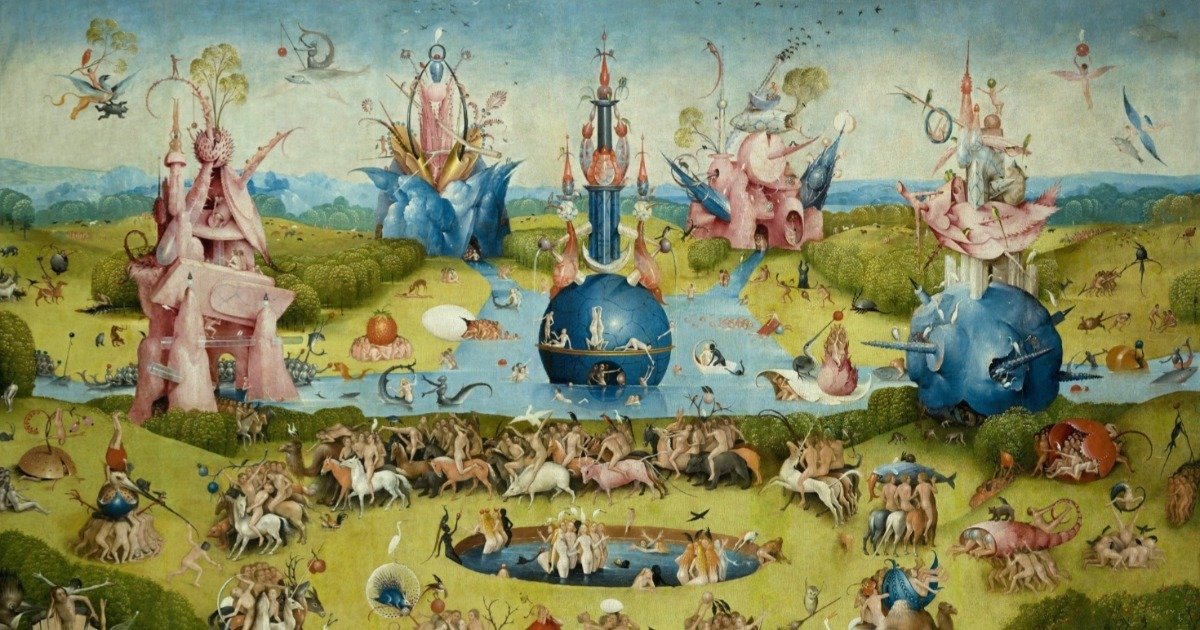
Source for image click here
"AT FIRST THERE WAS NOTHING ..."
CREATIVE WRITING
PROMPTED BY FAULKNER'S "The Old People"
BLACKOUT POETRY. INSPIRED BY
SECTION 4 FROM "THE BEAR" in FAULKNER'S
"GO DOWN, MOSES"
Consider the passage below from “The Bear” by William Faulkner (“Go Down, Moses). Delete all the words you consider necessary to make your own poem. This poem will distill the essence of the short story as you perceive it. Number of words : maximum 45
Source text for the poetry:
“not against the wilderness but against the land, not in pursuit and lust but in relinquishment, and in the commissary as it should have been, not the heart perhaps but certainly the solar-plexus of the repudiated and relinquished: the square, galleried, wooden building squatting like a portent above the fields whose laborers it still held in thrall ‘65 or no placarded over with advertisements for snuff and cures for chills and slaves and potions manufactured and sold by white men to bleach the pigment and straighten the hair of negroes that they might resemble the very race which for two hundred years had held them in bondage and from which for another hundred years not even a bloody civil war would have set them completely free.......himself and his cousin amid the old smells of cheese and salt meat and kerosene and harness, the ranked shelves of tobacco and overalls and bottled medicine and thread and plow-bolts, the barrels and the kegs of flour and meal and molasses and nails, the wall pegs dependant with plowlines and plowcollars and harnes and trace-chains, and the desk and the shelf above it on which rested the ledgers in which McCaslin recorded the slow outward trickle of food and supplies and equipment which returned each fall as cotton made and ginned and sold (two threads frail as truth and impalpable as equators yet cable-strong to bind for life them who made the cotton to the land their sweat fell on), and the older ledgers clumsy and archaic in size and shape, on the yellowed pages of which were recorded in the faded hand of his father Theophilus and his uncle Amodeus during the two decades before the Civil War, the manumission in title at least of Carothers McCaslin’s slaves--did own it. And not the first. Not alone and not the first since, as your Authority states, man was dispossessed of Eden. Not yet the second and still not alone, on down thorugh the tedious and shabby chronicle of His chosen sprung from Abraham, and of the sons of them who dispossessed Abraham, and of the five hundred years during which half the known world and all it contained was chattel to this plantation and all the life it contained was chattel and revokeless thrall to hi s commissary store and those ledgers yonder .....There are somethings He said in the Book, and some things reported of Him that He did not say. And I know what you will say now: That if truth is one thing to me and another thing to you, how will we choose which is truth? You don’t need to choose. The heart already knows." ("The Bear" (section 4), Go Down, Moses by William Faulkner)
This is how we see it:
“The Bear,” a review by Begoña Rodríguez Varela

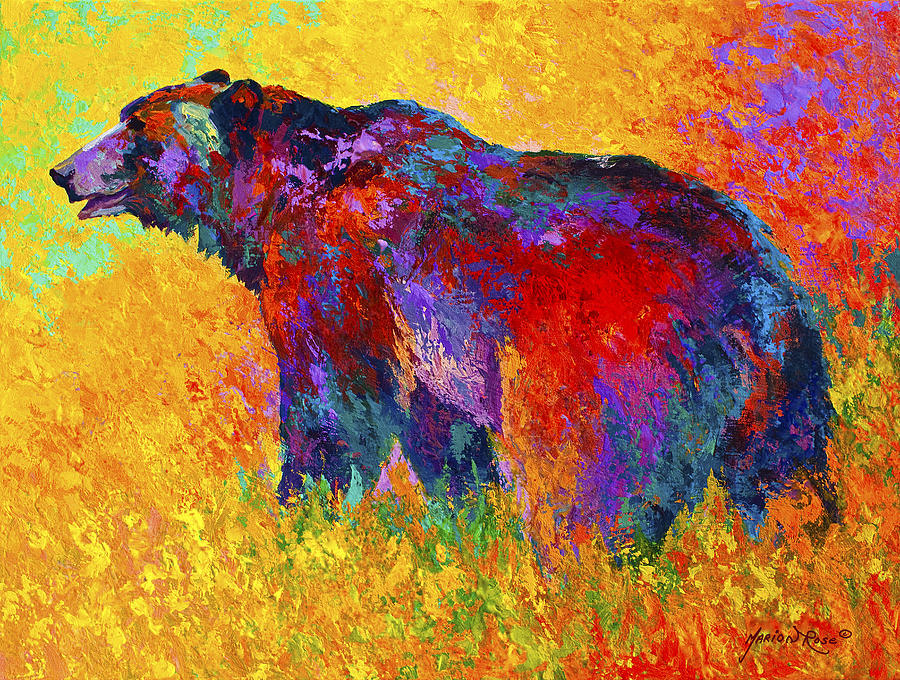
“Into the wind” By Marion Rose (Pic chosen by Begoña Rodríguez Varela). Click here for source
“Only the heart knows , only the heart sees”
True. It is through Ike´s eyes that we get absorbed in the story of The Bear, of his own self and the South. This is a physical, spiritual and intellectual journey. But….Is the heart always infallible?
Initially, after some trial - and - error experiences, Ike, alone, meets old Ben, without any modern devices. It is only then, when He turns around and looks at Ike in the eyes, mirror-reflection like, there it is…..the Bear, his alma mater, a creature in Nature.
Then, the frantic chasing of old Ben, amidst suspense, takes place and the narrative runs attuned with the chase, keeping the pace. It all ends up with the epic combat between Lion, savage-childlike Boon and the Bear. Death ensues.
Lion and Sam are buried under the Gum tree, a holy tree, whereas the immortal Bear is somewhere in the Woods, where nothing ever dies, but transforms into a myriad of forms, shapes, scents and colours; a swerve that goes from the local to the universal and back. Superb.
Immediately, thereafter , in a vivid powerful conversation with “clever” Cass (without verba dicendi), Ike concludes that he cannot own the land after learning about his past. In a series of flashbacks and flashforwards, we are told about the rape of the land, slavery, miscegenation and…about how his uncles tried to redeem the sins by giving the land in manumission. Not enough for him.
Finally, we are flooded with Ike´s emotions and memories through sheer interior monologue technique. In an unstoppable stream of thoughts and unending sentences, we know about his opinions on God, the Civil War and the battles of Chancellorsville and Gettysburg, the Emancipation of slaves, the North and the South and landowners as well as carpetbaggers,the Ku Klux Klan ….in short, perpetuated sins.
So, Ike has no choice but to repudiate the land. He can´t shoulder the burden and ”Several generations will pass before the right thing is done”. He chooses freedom. He “will laugh.”
Ironically, his Idealism, his high values take him to evasion and self-immolation….But after all, endurance and resilience is what he learnt there, in the timeless Wilderness, from old Ben, the Bear.
“The Old People” (Go Down, Moses. Chapter 4)
by William Faulkner

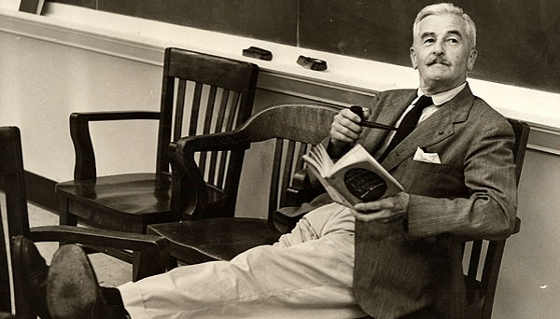
Source for photograph: click here
“At first there was nothing”
With this almost messianic and forceful genesis – like phrase, we are introduced into the chapter of “The Old People” in Faulkner’s “Go Down, Moses” The pristine nature of the land and its spiritual meaning are already captured in this sentencious bang. The chapter revolves around young Isaac McCaslin’s rite of passage led by the hand of Sam Fathers who will initiate him into adulthood by the hunting of deer and the subsequent anointment with its blood. This is a coming-of-age ritual that will presuppose not only a physical journey but also a spiritual one.
Whereas Cass McCaslin, cousin to Isaac, 16 years his older, more a brother than a cousin, and more a cousin than a brother, is in charge of the material legacy, Sam Fathers blazes the trail for spiritual values. Sam Fathers will indeed pass onto Isaac the legacy of a land that needs healing and redeeming from the destructive, plundering and dehumanizing action of the past forbearers. Sam Fathers represents "the Old People." Isaac remains forefront, carefully watched by Sam Fathers.
Sam Fathers has been fathered biologically by Ikkemotube, a Chickasaw Indian Chief, nicknamed “The Man” / “Du Homme” / “Doom” and , by Carothers McCaslin, surrogate father, to whom his own father has sold: “two years later sold the man and woman and the child who was his own son to his white neighbor, Carothers McCaslin” (158)
Sam Fathers gets precisely sold at the age (10 years old ) that Isaac McCaslin gets initiated into this passage from childhood to manhood: “That was seventy years ago. The Sam Fathers whom the boy knew was already sixty” (page 158). Isaac is the beacon bearer of the foreknowledge that Sam, embodiment of all the races, will pass onto him.
“with hair like a horse’s mane which even at seventy showed no trace of white and a face which showed no age until he smiled, whose only visible trace of negro blood was a slight dullness of gthe hair and the finger nails…”
Indeed, from this chapter, onto the next, the racial conflict almost remains on the background to give way to a primeval sense of belonging, when “man” was “man,” nor “white” nor“black”: the individual alone will face the impenetrable mysteries of the land in its most fierce and ominous aspects.
After the first anointment and the rite of passage, Sam and Isaac encounter a second deer, a 14 spike antlered buck, which Walter, Boon and Major de Spain miss and to whom Sam refers to as “grandfather” (175). The spikes in its horns indicate its times- of- lore vagrancy in the wilderness: “the eye of the ancient immortal Umpire” (172) . Tone-deaf and in the wilderness, young Isaac only hears his own blood, fear, and breathing. Something overpowering and ominous preceeds them:
“Then it saw them. And still it did not begin to run. It just stopped for an instant, taller than any man, looking at them; then its muscles suplpled, gathered. It did not even alter its course, not fleeing, not even running, just moving with that winged and effortless ease with which deer move, passing within twenty feet of them, its head high and the eye not proud nor haughty but just full and wild and unafraid” (175)
Both Sam and Isaac spare the buck: unearthly, immortal, defiant.
“And the earth is shallow; there is not a great deal of it before you come to the rock. And the earth dont want to just keep things, hoard them; it wants to use them again. Look at the seed, the acorns, at what happens even to carrion when you try to bury it; it refuses too, seethes, and struggles too until it reaches light and air again, hunting the sun still” (McCaslin to Isaac, page 177)