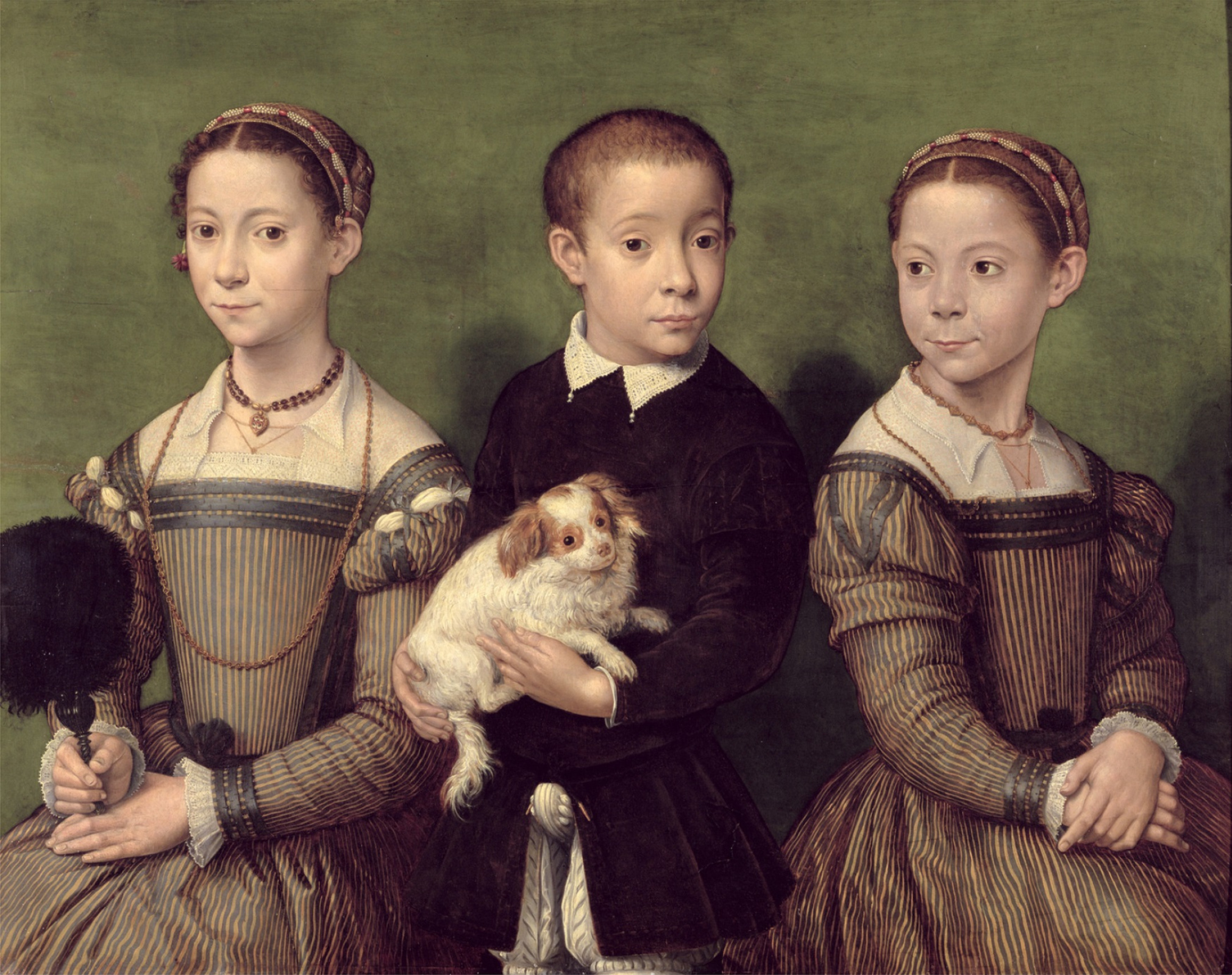
Source for Image: https://paintingz.com/media/catalog/product/cache/34bbb8696bc90914125c43a0ff3036af/5/6/561372.jpg
"TOO MUCH HAPPINESS"
MULTIFACETED MUNRO
A REVIEW OF YOUR FAVOURITE STORIES

DIEGESIS VS REAL-LIFE DRAMA
IN “FICTION”
BY ALICE MUNRO

Source: “The Lovers” by René Magritte. (1928)
“Art evokes the mystery without which the world would not exist” René Magritte
Alice Munro’s short story, “Fiction,” draws attention to how selves are contrived through the different “realities they / we concoct for ourselves” (source here). This is a story about multi-faceted personalities and changing relationships, new family alliances (as highlighted by Belén), memory, and loyalties. It is a story about about the perception and reinvention of the self. Riding astride these topics, a reflection on the nature of fiction through different diegetic modes can also be found. Characters are seen through different lenses.
“The play-reading group emoting in the front house while somebody spills out the details of real-life drama in the kitchen (Joyce’ s presence required in both locations” (page 45).
This quote is evocative of both life and fiction (thanks to Natalia that brought this quote forward and which is of paramount importance in the development of the narrative).
In the first part of the story, the sequence of events is filtered through the eyes of Joyce, holding viewpoints about the events narrated by means of lapses between autodiegetic and homodiegetic narrative (see here for clarification on these terms). Contrariwise, a heterodiegetic narrator, in the second part of the story presents Joyce again in an entirely different fashion. Place, setting, husband, life, connections have all been altered. Let us see the contrast between the two lenses:
“She felt herself shedding the day’s work, which was harried and uncertain, filled with the dispensing of music to the indifferent as well as the responsive. How much better to work with wood and by yourself---she did not count the apprentice—than with the unpredictable human young” // or // “She should have understood, and at that moment, even if he himself was nowhere close to knowing. He was falling in love” (37)
Joyce and Joy live in a forest that is described through the eyes of Joyce as “unreal,” the level of fiction already working within fiction itself (metafiction). Joyce imagines the lives of the people that she sees through the windows, “scenes that beguiled her, even if she knew things would not be so special inside”(33). Jon and Joyce have made life decisions, and debunked societal expectations in spite of their high intellectual standards: “she was expected to turn into a fine performer on the violin—that was before she gave it up for the cello—and he was to become some daunting sort of scientist whose labours were beyond description in the ordinary world” (34). Joyce pines about Jon’s infidelity, she attempts to conjure his return and liberate him from the mesmerising power of Edie, the apprentice, “a short, sturdy young woman who did not look old enough or damaged enough to have much of a career of dissipation behind her …”
“How could this have happened? Joyce asks ….Such a person has eclipsed Joyce with her long and slim waist and long silky braid of dark hair. Her wit and her musice and the second highest IQ” (38)
Joyce acts as an only catalyst of the circumstances surrounding her. We hardly hear Jon, or Eddie. The reader only has access to Joyce and Jon’s world through the eyes of Joyce. As in life, a character might be seen from different perspectives, but it is only Joyce’s view of the situation that we have access to, at first. Jon unhinges himself from this soloist vision; he bluntly says that “there is not we any more” and we land in part 2 with a totally different perspective of Joyce.
Perhaps it is Jon’s telegraphic perception “Threatened. Booze. Fragile” and not Joyce’s mental pyrotechnia that has won Eddie a place in Jon’s affections. A “tour de force” in the second part of the narrative plays the magic. Joyce appears as a different character, from a totally different perspective. She is no longer in that liminal hippie community to which she seemed to belong in a certain way, she is no longer in the forest, but in a party of seeming elitists, where new alliances have been made:
“ She is a lean, eager-looking woman with a mop of pewter-coloured hair and a slight stoop that may come from coddling her large instrument, or simpley from the habit of being an obliging listener and a ready talker.” (43).
Joyce has married an amateur violinist, a proffesor, who hardly has time for her, and who does not like reading “fiction.” Again, Joyce, in spite of her discontent, shifts perspective from her inner role to the role of an outsider who might possibly see things in a different fashion: “ ...if she had time to look at it from outside. She would probably envy herself, from outside” (page 45).
The demystification of writing as external apparatus. Christie’s authorship
In this section, Alice Munro also reflects about the process of writing as a shibboleth: “I forget what it’s called. Some title like a how-to-book. You let your first book out, I guess you are hot shit for a while”(49). “How are We to Live” is the title of the book that Christie, daughter to Eddie, has written (notice the overlapping of life / fiction). Through Joyce's thoughts on Christie's book, the omniscient narrator brings forward, from an ironic perspective, the idea of how short story writing might have been considered a lesser genre, which is not the case as it has already been proved by its art, trajectory, tradition and history, but, by voicing out these considerations, Munro might be puzzling out the struggling obstacles some writers of short fiction may encounter or encountered in the past in the editorial rat-race (thanks to Cándido that brought forward this metafictional reflection that the narrator makes) referred to in the following lines:
“A collection of short stories, not a novel. This is in itself a disappointment. It seems to diminish the book’s authority, making the author seem like somebody who is just hanging on the gates of Literature, rather than safely settled inside.” (50)
Christie, daughter of Edie, and now author, fails to recognize Joyce. Christie elaborates the narrative of her own life which Joyce reads and which differs from her own narrative. We have discussed the possible intentionality of this lack of anagnorisis (see here the explanation of this term from Aristotle “Rhetoric”, a term that means, “recognition”) Is Christie pulling an act? Or is there a true lack of recognition? Or is it simply a way of illustrating the different narratives that might exist in fiction and real life?
“Here was where the writer would graft her ugly invention onto the people and the situation she had got out of real life, being too lazy to invent but not to malign. For some of it was true, certainly.” (page 57, Joyce on Christine’s writing)
From the collection of short stories
"Too Much Happiness" (2009)
Dimensions

Philomela Ovid and the Censored Voice
Dimension: Dictionary definition: measurable extent, magnitude measured along a diameter.
Doree had to take three buses on her way to the facility. Doree appears suspended, floating, in an undimensional unmeasurable referentiality. Which facility is this one? Who is Doree? She is a chambermaid who doesn’t care about waiting on a bus station for long, a girl whose friends tell her she must make progress in her work. She doesn’t like to talk to people. She is the girl on the photograph that was released on the papers, after the tragedy, we will later know about; she is the girl whose hair “had been long and wavy and brown then, natural in curl and colour, as he liked it, and her face bashful and soft—a reflection less of the way she was than of the way he wanted to see her” (page 2). But Doree’s hair is no longer brown and wavy, the way he wanted, she has cut it short, bleached and spiked it. She is no longer the girl that did not wear make up because he told her so, she is the girl who does not wear make up because she has decided so, even if this is a scar of a perfunctory act.
Doree suffers the deprecatory treatment of her husband, who abuses and maltreats her through a vicious circle of coercive control, physical and mental isolation. The acme of violence: Lloyd kills their children. The way their bodies are described constitute a suffused pulp narrative of the deaf-tone feeling that Doree will undergo after the shock.
A muteless Philomela (see here the myth of Philomela), Doree heads to the source of her pain, Lloyd, and visits him in prison, the facility which has been mentioned at the beginning of the narrative. She lies to Mrs Sands, who is psychologically supporting her through the trauma, and, contrariwise, sneaks to see Lloyd. First, thinking that she can reverse the situation somehow. Later, driven by that same senseless silence of unassuaged pain. Lloyd, in an epiphanic visionary frenzy, tells her he has seen the children on a different dimension:
“I have seen the children. I have seen and talked to them….I say they exist, not they are alive, because alive means in our particular Dimension, and I am not saying that is where they are. In fact I think they are not. But they do exist and it must be that there is another Dimension or maybe innumerable Dimensions, but what I know is that I have got across to whatever one they are in…They are fine. Really happy and smart. They don’t seem to have any memory of anything bad.…(page 25)
This vision sustains Doree with a sliver of hope. Doree seems to have recovered some kind of happiness, “She still did not have that spontaneous sense of happiness, exactly, but she had a reminder of what it was like. It had nothing to do with the weather or flowers. It was the idea that the children were in what he had called their Dimension that came sneaking up on her in this way…” (page 27). This does not bespeak of happiness, but a way to muffle and face her pain.
Let us remember that the story “Dimensions” opens up the collection of short stories “Too Much Happiness” (2009). The title is a harbinger of negative connotations confirmed by the dark tone of the opening story. Other stories confirm that the misery of some transforms and metamorposes into the happiness of others. We should bear this in mind as we read and navigate through the different stories.
At the end of the current story, there is a meaningful episode in which Doree,on her way to the facility, happens to resuscitate a man who has suffered an accident and is on the verge of dying, through a technique that Lloyd had taught her. One must be aware, in case of an accident, that the tongue does not block the breathing. After saving this man, Doree does not need to return to the prison.
The myth of Philomela comes to mind again, who deprived of her tongue, could not communicate the atrocious crime she had been a victim of, but she was turned into a bird by the Gods so her story could be heard through her trill.
To all women who are victims of violence, may your stories be heard, and your tongues let loose
Brotherly bonds
by Mila Prol
Sofonisba Anguissola - "Three children with dog" (1570)
In this novel, Maggie O'Farrell depicts, masterfully and delicately,true fraternal relationships between siblings that go beyond life. As Agnes and Bartholomeu grow up in a hostile environment, she has the urge to protect him from his stepmother.
“She grows up knowing that she must protect and defend Bartholomew from all of life’s blows, because no one else will.”
Equally, when she falls in love with that “useless and beardless lad,” according to her stepmother, Bartholomew corresponds to her tenderness by being watchful of her future well-being:
“Take good care of her, Latin boy, very good care, and no harm will come to you.”
Correspondingly, he will abandon his farm and family duties to accompany his sister on her trip to London, where uncertainty awaits her.
Similarly, when a young Hamnet is desperately in search of an adult to aid his ill twin sister, Judith, as death looms imminently, he doesn’t doubt to give his life for hers, in an act of true love and sacrifice.
“It will be easy for Death to make a mistake, to take him in her place.”
As a result of this tragedy, the feeling of being incomplete will invade Judith’s life.
“What is the word, Judith asks her mother, for someone who was a twin but is no longer a twin?”
Bartholomew and Hamnet are the omniscient protectors of their sisters, always there, if needed, always in their memory.